Introduction to Trezor Login
Logging into your crypto wallet is one of the most important steps in digital asset security. Trezor Login provides a secure gateway to your funds by leveraging the strength of hardware-based protection. Unlike software wallets or exchange-based accounts that can be exposed to phishing, hacks, or malware, Trezor Login requires physical device verification, ensuring that only the rightful owner can access their assets.
In this article, we’ll explore in detail how Trezor Login works, its security advantages, the setup process, and why it remains one of the most trusted solutions in the cryptocurrency ecosystem. By the end, you will understand not only the mechanics of secure login but also how Trezor empowers everyday users to take full control of their crypto future.
Why Secure Login Matters
The importance of secure login cannot be overstated. Every year, billions of dollars in cryptocurrency are lost due to poor login practices, phishing emails, and compromised credentials. Traditional password systems are no longer enough—hackers deploy sophisticated malware, keyloggers, and man-in-the-middle attacks to bypass simple security measures.
Trezor Login solves this issue by removing the need for fragile password-only systems. By combining hardware authentication with PIN codes and recovery phrases, Trezor ensures that your assets are protected even if your computer is infected with malware or if you accidentally click on a phishing link.
How Trezor Login Works
1. Hardware Authentication
When logging in, you must connect your Trezor hardware wallet (such as Trezor Model One or Trezor Model T) to your device. This ensures that only the physical wallet owner can initiate access.
2. PIN and Passphrase Security
Users are required to enter a secure PIN directly on their Trezor device, preventing exposure to keyloggers. An optional passphrase feature adds another layer of security, acting as a “25th word” for recovery.
3. Transaction Verification
All sensitive actions, such as sending crypto or confirming logins, must be manually approved on the Trezor device screen. This prevents unauthorized access, even if the computer is compromised.
4. Recovery Seed Backup
During the initial setup, Trezor generates a recovery seed. This seed is your ultimate backup. Even if your device is lost or stolen, you can recover your wallet on another Trezor device using this phrase.
Setting Up Trezor Login
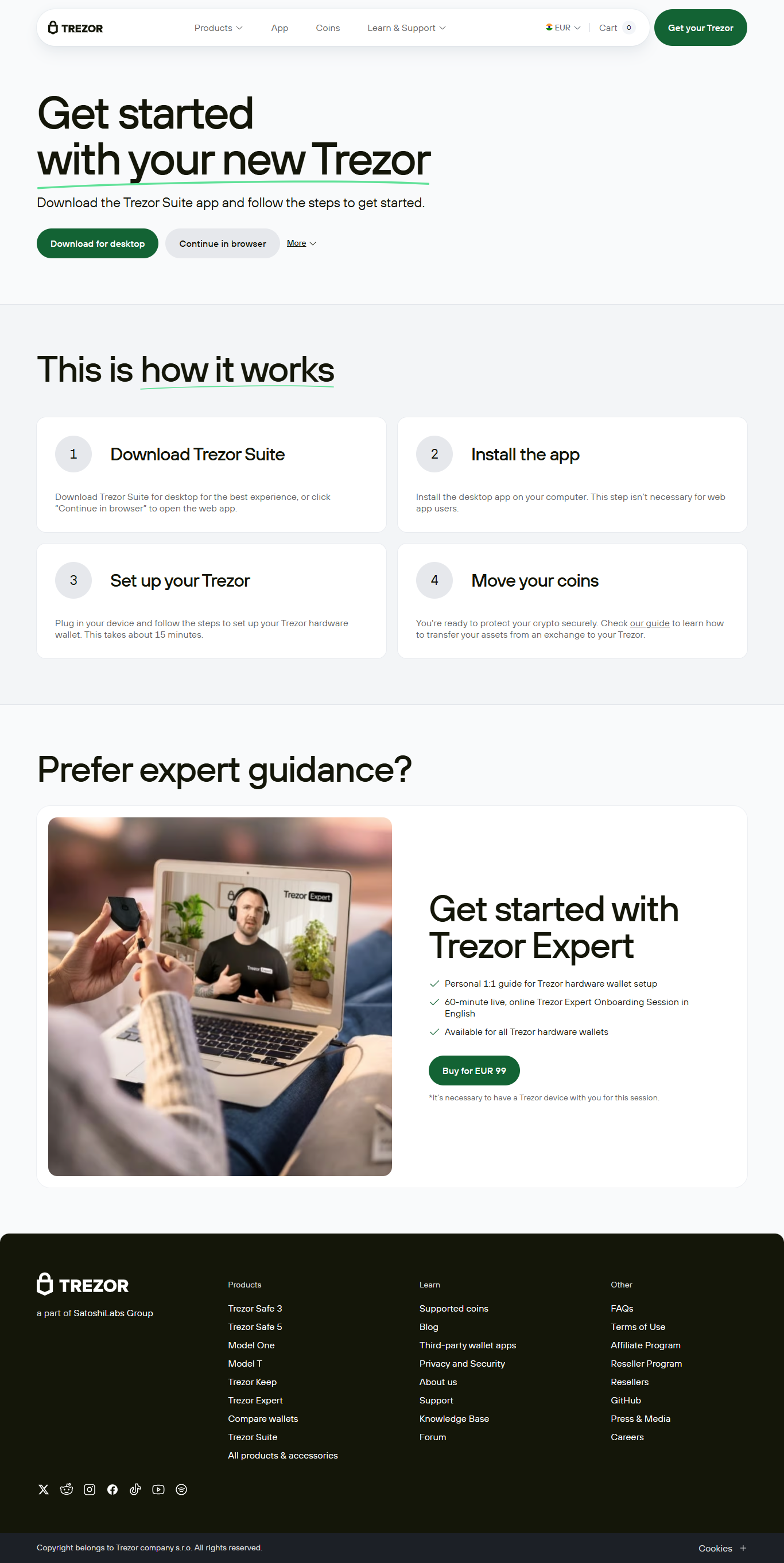
Getting started with Trezor Login is straightforward. Here’s the step-by-step guide:
- Purchase a Trezor device from the official Trezor website or authorized resellers.
- Connect your device via USB to your computer.
- Download and install Trezor Suite, the official application for managing Trezor wallets.
- Follow the guided setup to create your PIN and backup recovery phrase.
- Enable optional passphrase protection for maximum security.
- Once complete, you can log in to supported platforms using Trezor Login authentication.
Advantages of Trezor Login
- Unparalleled Security: Hardware-based authentication eliminates phishing risks.
- Ease of Use: Simple setup with guided steps for beginners.
- Privacy Focused: Trezor never collects your data or private keys.
- Universal Compatibility: Works with multiple cryptocurrencies and third-party services.
- Backup & Recovery: Recovery seed ensures you never lose access to funds.
Trezor Login vs. Traditional Logins
Comparing Trezor Login with traditional logins highlights its superiority:
- Traditional Login: Passwords can be guessed, stolen, or hacked.
- Trezor Login: Requires physical hardware and user confirmation.
- Traditional Login: Relies on centralized databases vulnerable to breaches.
- Trezor Login: Decentralized, with no central server storing sensitive information.
- Traditional Login: Users depend on third parties for account safety.
- Trezor Login: Empowers users with full control and responsibility.
Best Practices for Secure Trezor Login
- Always buy your Trezor device from trusted sources.
- Store your recovery seed offline and never share it.
- Enable passphrase protection for added security.
- Update your Trezor firmware regularly to stay protected against new threats.
- Be cautious of phishing websites and always verify URLs before logging in.
Future of Secure Login in Crypto
As cryptocurrencies gain mainstream adoption, secure login systems will play an even greater role. Trezor’s model of hardware-based login is already influencing the broader security industry. We may soon see similar systems integrated into financial platforms, DeFi applications, and even mainstream internet logins. By prioritizing security today, Trezor is shaping the login systems of tomorrow.
Conclusion
Trezor Login is not just a feature—it’s a philosophy of self-sovereignty, security, and independence. By requiring physical confirmation, PIN codes, and optional passphrases, it drastically reduces the risk of unauthorized access. More importantly, it empowers crypto users to take full control of their assets without relying on centralized intermediaries.
Whether you’re a beginner safeguarding your first Bitcoin or a seasoned trader managing a diverse portfolio, Trezor Login ensures your digital wealth remains yours alone. In an industry where trust is often fragile, Trezor provides certainty: your keys, your crypto.